


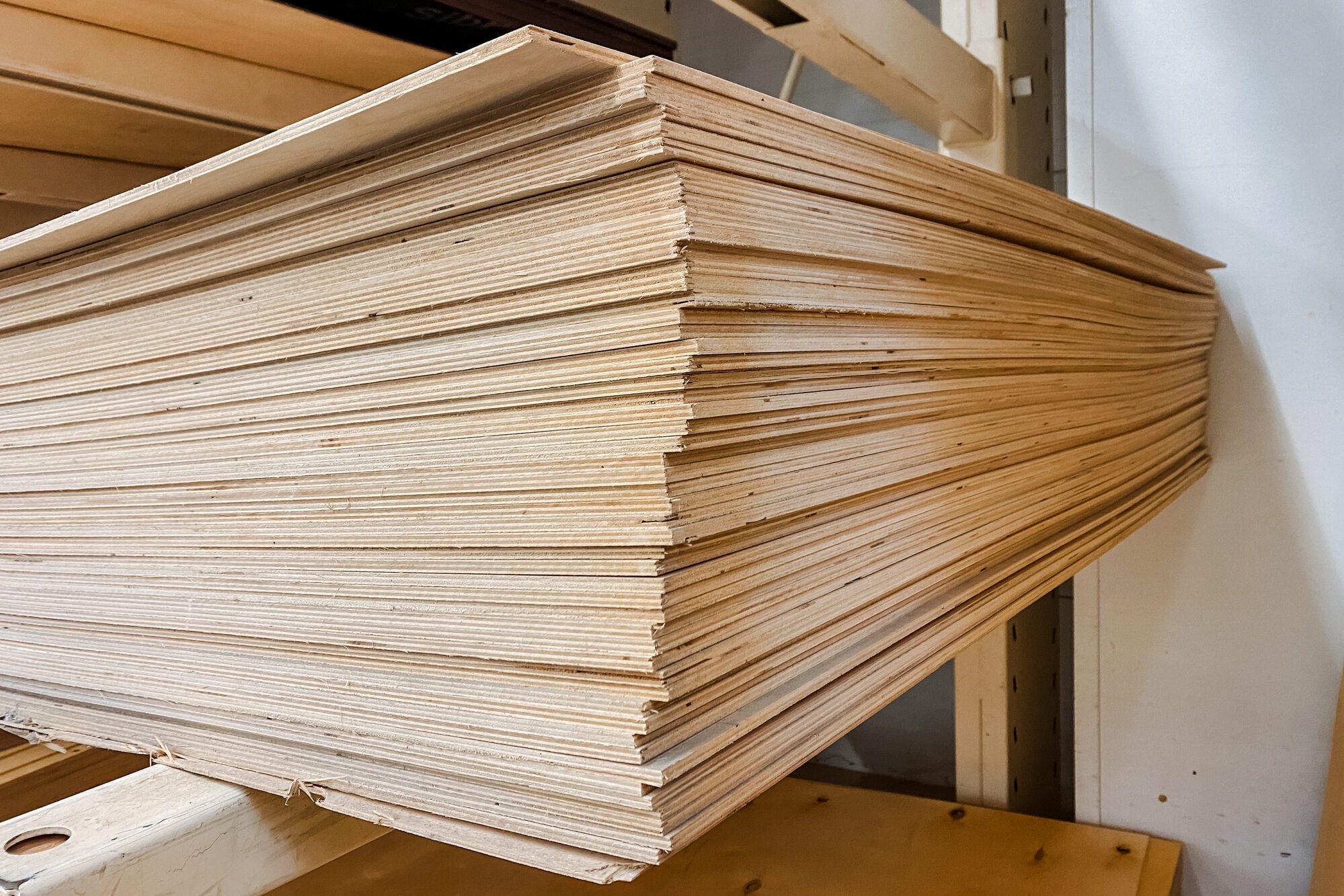
Don't let a piece of plywood that's past its prime ruin your project.
1
/
6

Delamination
Watch out for plywood with delaminated layers, as this can greatly diminish its strength and integrity. This defect has several causes.
“Delamination is usually a manufacturing problem,” Fagnund says. “Occasionally, they might have a problem with glues or miss it in quality control.” However, these pieces can still reach the sales floor, so inspect them carefully before buying, especially for structural applications. Delamination usually begins on plywood edges.
2
/
6

Core voids
Voids, or gaps where two sections of a ply layer meet, are an allowable defect, but large core voids reduce plywood’s structural strength. Hidden inside the panel, this issue can be tough to spot. “Sometimes you don’t find out until you cut a piece and find layers missing out of the middle,” Bernacki says. Before buying, press your hand across the plywood surface to feel for soft spots or flexing veneer, both a sign of core voids.
3
/
6

Large or loose knots
Knots are another acceptable plywood defect and not an automatic sign that plywood’s no good. “If you’re buying a lower grade of plywood you will have knots, there’s nothing wrong with that,” Fagnund says. But if the knots are larger than 2 to 3-inches or are loose or missing, that’s a problem. “If you’re pulling the sheet out and the knots are falling off the plywood, I’d walk away,” Bernacki says.
4
/
6

Face veneer defects
Wrinkles, splits and excessive patches in face veneer layers are another tell-tale sign of plywood that’s no good, especially on higher grade plywood. “On a finish plywood, if there’s ripples or bubbles, that’s an imperfection and not supposed to happen,” Fagnund says. On lower grade plywood wrinkles on face veneers indicate lower manufacturing quality, while excessive splits and repairs can compromise the panel’s strength.
5
/
6

Warping
Warped plywood either suffers from poor manufacturing, physical defects — or both. Plywood can warp if it was stored, pressed or dried incorrectly during processing and shipment. This defect also occurs due to large core voids or missing layers, which lower its structural strength. Additionally, warped plywood is more difficult to install as it will not lay flat and can strain fasteners if forced flat during installation.
6
/
6

Mold
“If you pull out a sheet of moldy plywood at the store, put it back and keep looking,” Bernacki says. Mold indicates plywood with a high moisture content from improper storage or exposure to the elements during shipping. This is especially troublesome for interior grade plywood as “it’s not manufactured with exterior-grade glue, so if it gets wet that can cause delamination,” Fagnund says. Installing moldy plywood can also pose health risks to those with allergies or pre-existing conditions.
Tips to Preserve Plywood
Before use, store plywood properly to preserve its strength, shape and integrity.
- Lay plywood flat and store horizontally. Don’t lean it against a wall or risk warping or curving.
- Store plywood in a cool, dry spot to prevent moisture build-up and mold growth.
- Elevate plywood 6 to 12-inches off the ground with wood strips or pallets to promote air circulation and prevent moisture damage.
About the Experts
- Dave Fagnund is the third-generation owner of Fleury Lumber Company, a full-service lumberyard in Easthampton, Massachusetts, in business since 1948. He started working there in 1975 and has been running the company for 35 years.
- Chris Bernacki owns Hickory Property Services in Holyoke, Massachusetts. He brings more than 30 years of experience in the trades as a licensed contractor.