


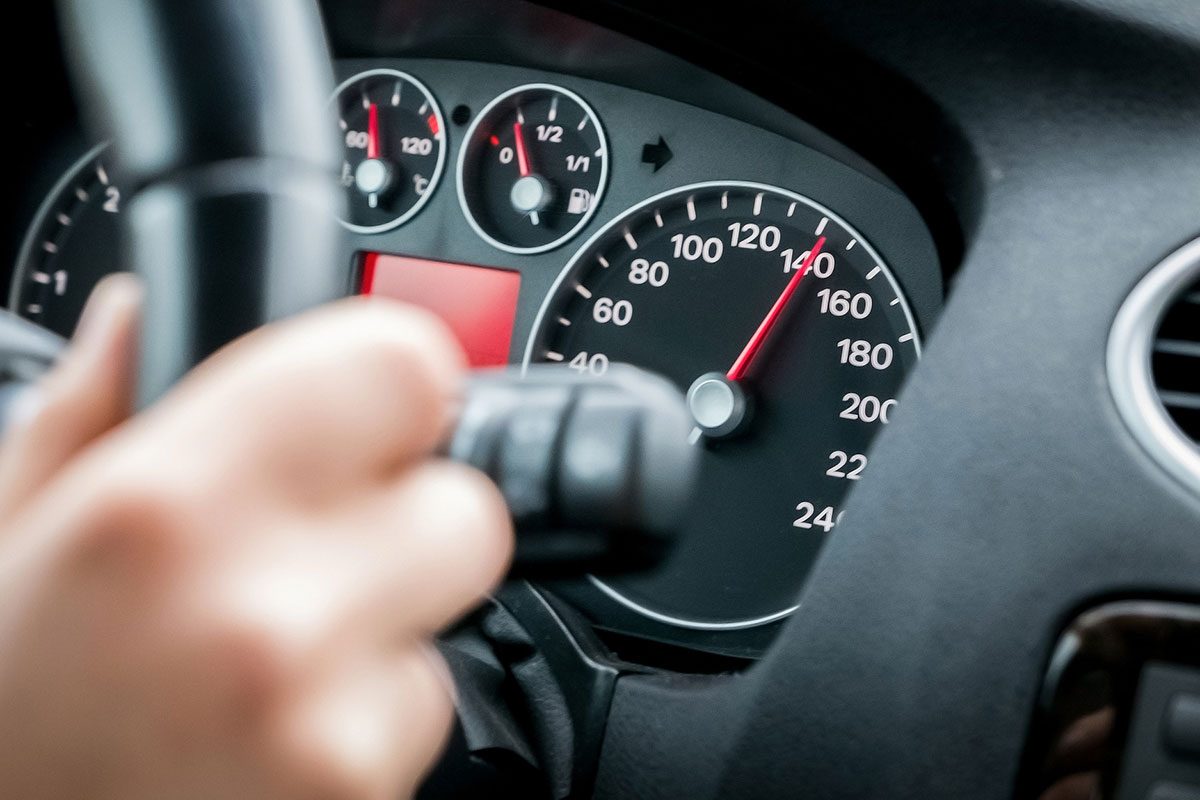
The numbers show speeding saves little time, uses more gas and raises the risk of crashes and costly traffic citations, quickly outweighing any gains.
Let’s face it, we’ve all done it: driving faster (sometimes a little, sometimes a lot) than the posted speed limit to save time getting to a meeting, work, doctor’s appointment, school or the big game more quickly. Just because everyone may speed to save a little time doesn’t make it the right thing to do.
A study by Cambridge University reveals increased driver frustration when they realize the time savings from speeding are minimal. Driving above the speed limit doesn’t just raise your stress levels, according to the National Highway Traffic Safety Administration (NHTSA), but it significantly increases your risk of a crash. NHTSA data show speeding contributed to 29 percent of all U.S. traffic fatalities in 2020, amounting to 11,258 lives lost. That’s an average of over 30 deaths a day.
So, does speeding really save time? Let’s look at the research, plus what a driving education instructor and experts in transportation and speed limit laws have to say.
The Diminishing Returns of Higher Speeds
The math confirms that speeding saves little time. For example, driving 65 mph instead of 55 mph saves only about 12 minutes on a 100-mile trip. Jumping from 55 mph to 75 mph can save approximately 28 minutes over the same 100 miles, but this assumes being on a clean, clear highway without stoplights or traffic congestion.
“Driving on city or suburban roads often involves traffic congestion or volume, stopping for traffic lights or stop signs, school buses, any number of other ‘variables’ which quickly reduce any time gained while speeding,” said Steve Norman, PA certified driver’s education instructor.
“Crash risk and severity rise sharply when speeding,” explained Joe Zdrilich, attorney with Zdrilich Law. “Many good, responsible drivers who weren’t driving recklessly thought that they could easily respond [brake or move out of the way] to unexpected events while going 75 mph or 80 mph.” People think speeding is just “pushing the gas pedal,” but it can lead to fatigue, while shrinking reaction time to avoid a crash.
A study published in the MDPI Journal of Intelligence shows that speeding may also affect cognitive functions, such as reducing the “time buffer” or the time margin drivers believe they have to perceive a situation, process that information, and respond appropriately in any driving event.
Real-World Driving Factors That Reduce Time Savings
Let’s start with Murphy’s Law: “Anything that can go wrong will, and at the worst possible moment.” In my experience, driving faster just gets you to the next stoplight or traffic jam quicker than someone following the speed limit and traffic laws.
“If you must get to somewhere in a hurry, even in an emergency situation, count on traffic lights, stop signs, traffic congestion and bottlenecks,” said Norman. Weather conditions (ice, rain, or snow), school zones and buses, and rush-hour traffic all force slower driving speeds, regardless of the reason you might be speeding.
A study by SUMA (Support for Urban Mobility Analysis) shows that road conditions (debris in travel lanes that disrupt the normal traffic flow), lane closures, construction zones, or road maintenance demand more focus. These factors significantly increase driver exasperation and fatigue, consequently, reducing alertness and reaction times.
Speeding can also cause you to drive erratically, cut in front of other cars dangerously, run through yellow or red lights, or blow your horn excessively. Mix these components with speed, and “an agitated driver disproportionately increases the likelihood of a crash or being pulled over by a police officer for speeding, “explained Norman. “There’s a far greater chance of critical injury versus any small gain you get. In the event of a crash, the costs are far more severe than just a traffic ticket. Lost time at work, court costs, property damage, medical bills and insurance rates multiply rapidly,” said Zdrilich.
Fuel Efficiency and Cost Impacts of Speeding
Most internal combustion engine (ICE) cars obtain optimum fuel economy when cruising between 45 and 65 mph. Aerodynamic drag dramatically increases fuel consumption above 65 mph. Lower MPG also means the engine is producing more tailpipe (smog) emissions. According to Consumer Reports, driving 75 mph instead of 65 mph can reduce fuel economy between 15 and 20 percent. If you drive 15,000 miles a year, and get 25 MPG driving 75 mph, it can easily add $400 or more a year to fuel your car.
If you’re trying to make up time by driving fast in the city, and are constantly accelerating and braking hard, you’re placing excess wear and tear on every system in your car, including the brakes, belts, engine, transmission, emission system, tires and even the auto stop system.
Smarter Alternatives to Save Time
Using GPS or navigation apps can help you avoid traffic congestion and road construction. Leaving 10 to 15 minutes earlier than planned will save more time than driving frantically or over the speed limit. If available, drive in the carpool lanes or use toll roads. There may be an added cost, but it can be a good way to shrink commute times legally and safely. Always maintain your vehicle. Regularly checking tire condition and pressure, tuning the engine, changing engine oil, fluids and filters will prevent you from causing a bottleneck or lane closure because you broke down.
FAQ
How are speed limits set?
Speed limits in the U.S. are generally set using guidance provided by the Federal Highway Administration Manual of Uniform Traffic Control Devices (MUTCD). “MUTCD standards distinguish between urban, suburban, and developed rural arterials versus freeways, expressways, and rural highways, as well as offer direction on how to apply the 85th percentile (the belief that roughly 85 percent of drivers will naturally choose the right speed as they drive on a particular road),” said Mike Agruss, of Mike Agruss Law. Unfortunately, this method assumes drivers will actually follow the posted speed limit. Other factors studied when setting or evaluating speed limits, include:
- Roadway environment.
- Roadway characteristics.
- Geographic Context.
- Crash experience.
- Speed distribution of free-flowing vehicles.
- Speed trends.
Unfortunately, most speed limits are reviewed reactively as a result of roadway changes, policy adjustments, zoning updates, or crash statistics. Additionally, although the MUTCD sets federal guidance for all traffic control, some municipalities develop their own traffic control standards.
Why do police enforce speeding more in certain areas?
Police are more apt to enforce speed limits in school zones, playgrounds, construction sites, traffic corridors with higher number of accidents, and residential side streets (often requested by residents) where children and pedestrians are vulnerable to speeding cars and trucks.
Experts
- Joe Zdrilich is a graduate of the University of Richmond and Syracuse University College of Law. He founded the Zdrilich Law Group in 2007.
- Mike Agruss holds a Bachelor of Arts in Law and Society from USC, Juris Doctor from University of Illinois (UIC), is a member of UIC John Marshall Journal of Information Technology, and is CEO and founder of Mike Agruss Law.
- Steven Norman, M.Ed., is a certified Pennsylvania Department of Education (PDE) and PennDOT certified behind the wheel driving instructor and driver’s license examiner currently teaching elementary physical education at Manavon Elementary School in the Phoenixville Area School District.
Resources
- Cambridge University Press: “Exploring the time-saving bias: How drivers misestimate time saved when increasing speed“
- Consumer Reports: “Tested: Speed vs fuel economy“
- Life Safer: “Fast and curious: Does speeding actually save time?“
- MDPI: “Use of Response Time for Measuring Cognitive Ability“
- NHTSA: “2020 Traffic Crash Fatality Data“
- NHTSA: “Overview of Motor Vehicle Crashes in 2020“
- NHTSA: “Risky Driving Speeding“
- NHTSA: “Speeding and Speed Management, Understanding the Problem“
- NHTSA: “Traffic Safety Facts“
- SUMA (Support for Urban Mobility Analysis): “Congestion Pie Chart for Different Sources of Congestion“
- U.S. Dept. of Transportation: “Overview of Motor Vehicle Crashes in 2020“


