


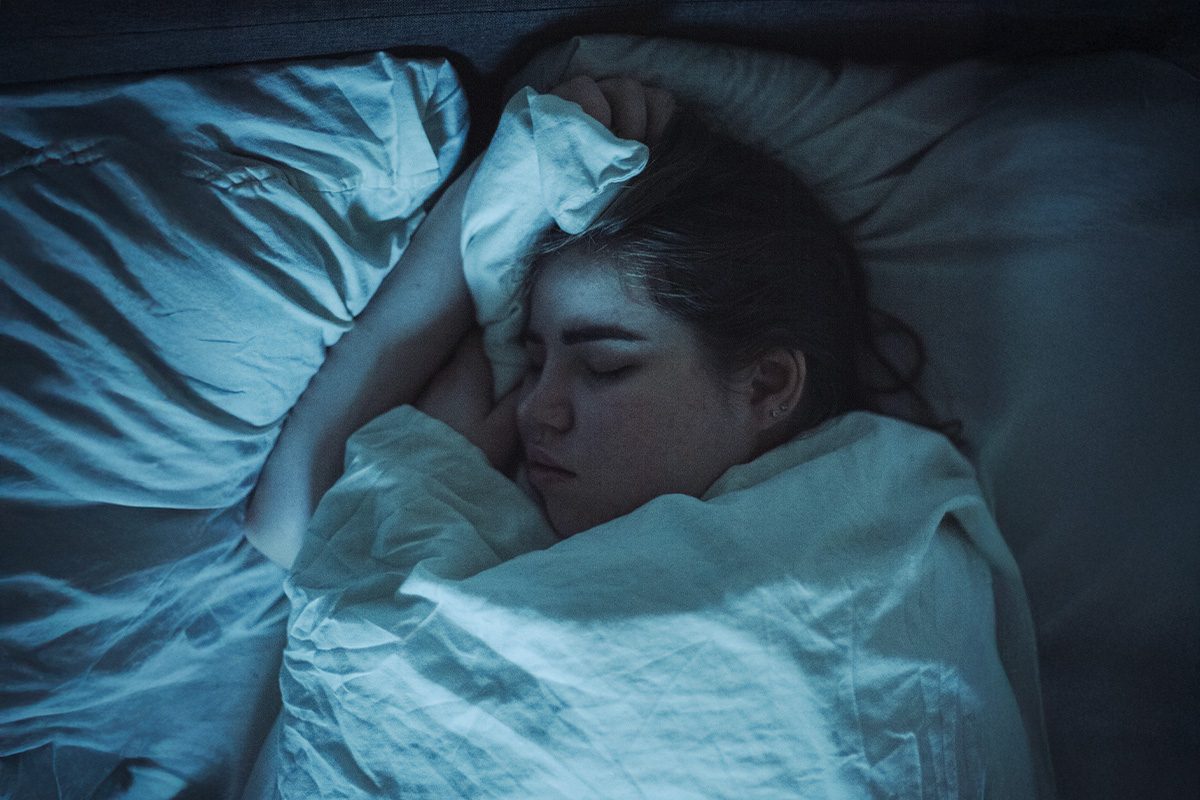
The sleep aids many rely on for a restful slumber may be disrupting sleep on a deep level. Learn more here.
Do you sleep in silence? If you do, it might surprise you to learn that a growing number of people in the U.S. now claim they cannot sleep unless some sort of sound— whether that’s pink noise, brown noise, or a babbling brook — is present in the room as they try to doze off. In fact, according to a recent study, 38 percent of modern sleepers rely on some form of noise-making sleep aid.
This stat certainly came as a shock to Mathias Basner, MD, PhD, a professor of Sleep and Chronobiology in Psychiatry at the University of Pennsylvania Perelman School of Medicine. “I have been studying the effects of traffic noise on sleep for the past 25 years, and was astonished to learn that millions of people use noise machines or playback broadband sounds like ocean sounds while sleeping,” Basner told SELF.
This astonishment would quickly turn to motivation. Basner, finding no available evidence for or against the use of sound as a sleep aid, decided to conduct his own study on the popular noise-makers.
Here are the results of that study, along with a breakdown of how listening to soft buzzing or rain sounds while you sleep really affects your REM.
Does Sound Impact Sleep?
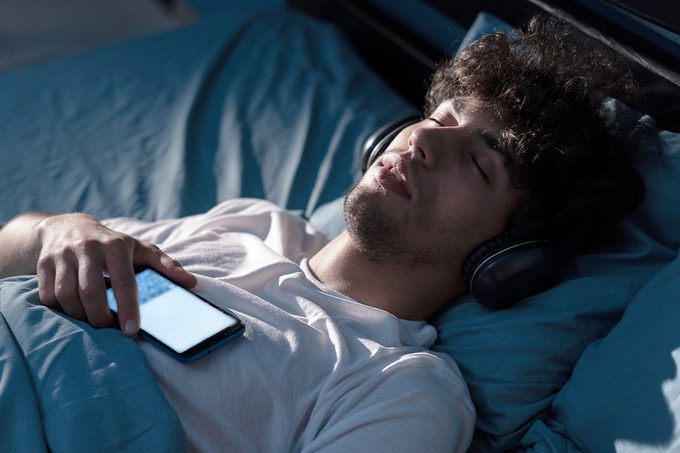
Basner’s study, which you can read in full here, was fairly simple. Twenty-five healthy adults spent seven nights sleeping in a controlled environment. Over the course of those seven nights, the sleep subjects were exposed to different noise conditions, including silence, pink noise, and airplane noise.
What is Pink Noise?
Before diving into the results of the study, it’s important to first establish exactly what “pink noise” is. All noise falls on a spectrum. Essentially, pink noise is a spectrum of frequencies, giving it a balanced, soothing sound similar to a waterfall. The uniform static sound is exactly what makes it appealing to people looking for a calming sleep aid.
But is pink noise actually good for sleepers? Let’s take a look.
Sleep Study Results
Here’s what the study found. Compared with sleep on a noise-free night, the study found that airplane noise significantly disrupted participants’ deep sleep. Interestingly, simple earplugs were enough to mitigate nearly all the effects of airplane noise on sleep, except at the highest level (65 dB).
Pink noise had similarly negative effects. Study participants exposed to pink noise reported reduced REM sleep. Participants also reported significantly worse moods and alertness levels following nights when they were exposed to noise, compared with nights when they slept in silence.
So… Are Sleep Aids Bad For You?
The results of the study certainly suggest that listening to noise while you fall asleep and as you slumber is impacting your body’s ability to sleep properly. Ultimately, though, more research is needed to determine exactly how universal these results are. One clear takeaway is that earplugs may be a better way to calm your mind… especially if you’re trying to sleep while traveling.
If you’ve been using pink noise to sleep and feel less rested than usual, it might be a good idea to take a break from the sleep aid and see how your body adjusts. Always do what you find is best for you… at the end of the day, bad sleep is better than no sleep.
Sources
- SLEEP “Efficacy of pink noise and earplugs for mitigating the effects of intermittent environmental noise exposure on sleep” 2026
- SELF “This Common Natural Sleep Aid Could Be Making Things Worse” 2026
- Talker Research, “Why Can’t Gen Z Sleep In Silence” 2025
Related


