


No matter what the situation, nature provides. Take shade, for instance. These 10 shade garden plants take varying amounts of shade and still add color, interest and beauty to your shade garden.
Colorful Shade Plants to Brighten Up Your Garden
1
/
10

Japanese Painted Fern
Japanese painted fern (Athyrium filix-femina) is a small, well-behaved fern that makes a graceful addition to shade garden plants. It won’t grow too big or too rambunctious. Instead, it beckons you to take a closer inspection of its multicolored foliage, which is an attractive mix of green, silver and maroon. Hardy in Zones 3 to 9, it grows 2 to 3 feet tall and wide.
2
/
10
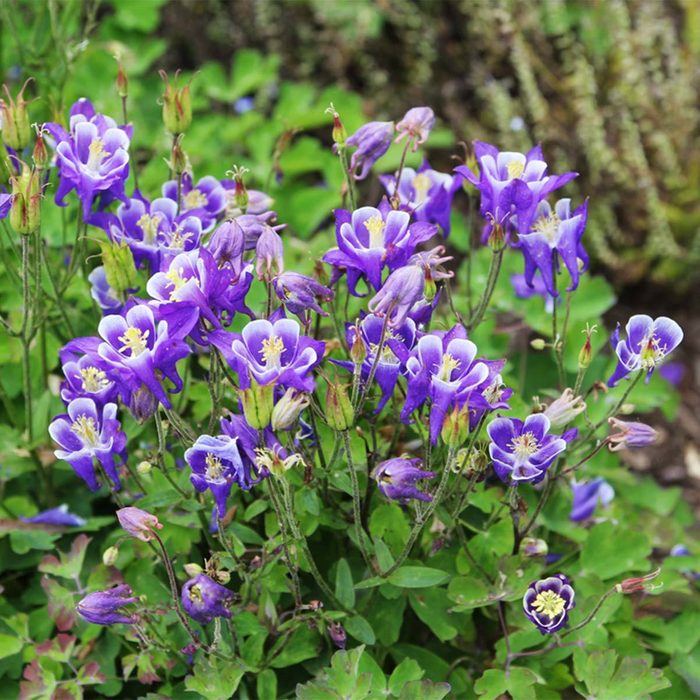
Columbine
The fern-like green to gray-green foliage tells you this is a shade plant, but the bright bi-colored flowers look as if they belong in a sunny meadow. Indeed, columbine (Aquilegia) is an adaptable perennial that takes anything from full sun to shade. It seems to do best in part shade, where it can grab a few hours of sunlight each day. The intricate flowers come in a rainbow of colors and appear in late spring and early summer. Columbine is hardy in Zones 3 to 8.
Tip: If you have difficulty with heavy shade, try planting some spring-blooming bulbs in the fall. Most will soak up the sun and bloom before trees are fully leafed out, so heavy shade isn’t a problem.
3
/
10
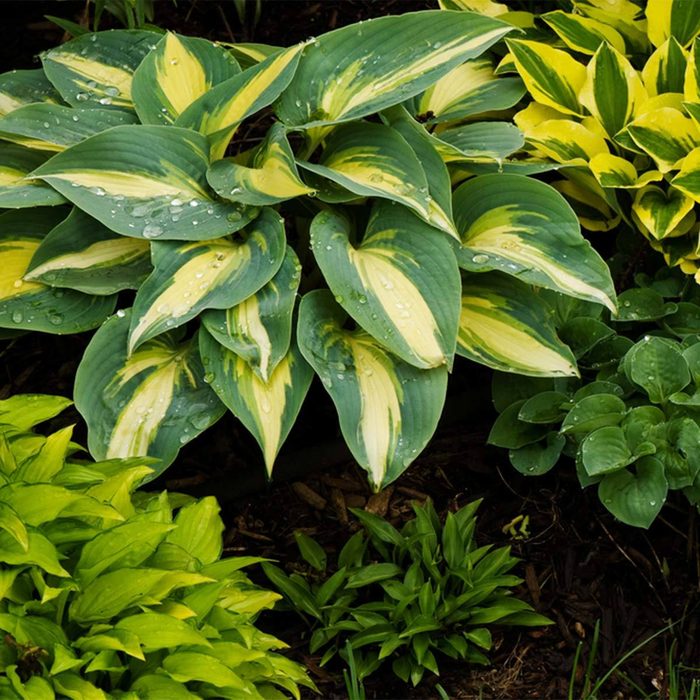
Hosta
A mainstay in shade garden plants for decades, hosta still manages to attract new fans each year. And why not? The range of sizes, colors and variegations is staggering. There is simply a hosta for everyone. No need to stick with the tried-and-true green varieties—not when there are chartreuse, blue and wildly variegated varieties at the ready.
Some have small leaves, others large. All offer flowers in summer, but it’s the foliage that people love. Hosta is hardy in Zones 3 to 9.
4
/
10
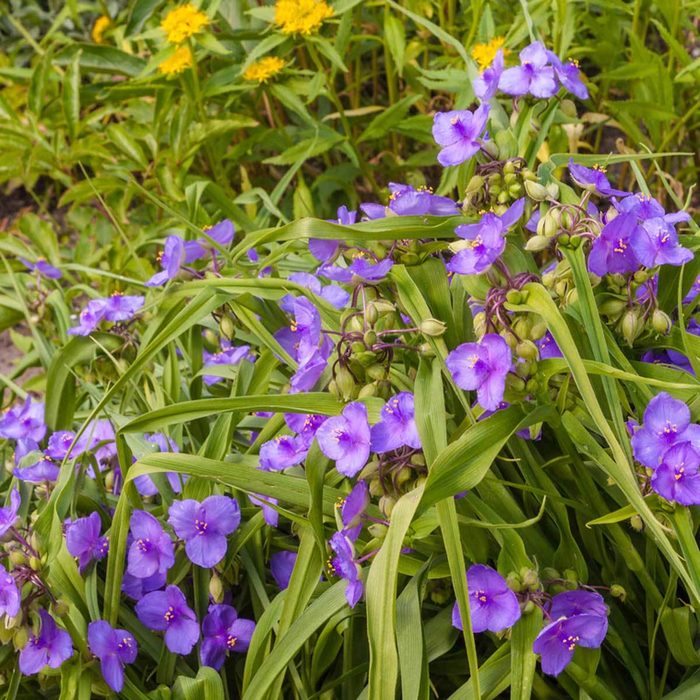
Spiderwort
Spiderwort’s narrow, grasslike foliage is a nice complement to hosta’s traditional wide-leaf look. And while it may not have the variegation choices of hosta, it does have some pretty fine-looking blue-purple flowers from midsummer to fall. Spiderwort (Tradescantia) is also tough, needing no help to grow or protection from deer. If anything, it can become a bit thuggish if left to its own devices.
It is best to divide plants occasionally to make room for other plants. Or plant it in a shade garden where it can’t take over. Spiderwort is hardy in Zones 4 to 11.
5
/
10
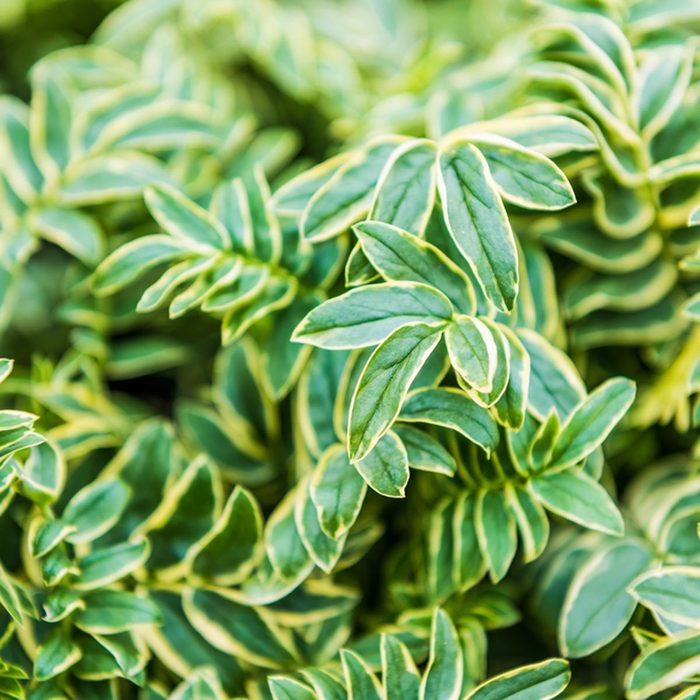
Jacob’s Ladder
Jacob’s ladder (Polemonium caeruleum) is a treat to have around when clear blue flowers appear in late spring and early summer. Even without the flowers, however, it earns a spot in the shade garden with its finely divided variegated leaves. Jacob’s ladder looks particularly good in a natural setting with woody plants, ferns, rocks and tree stumps. It is hardy in Zones 4 to 8.
6
/
10
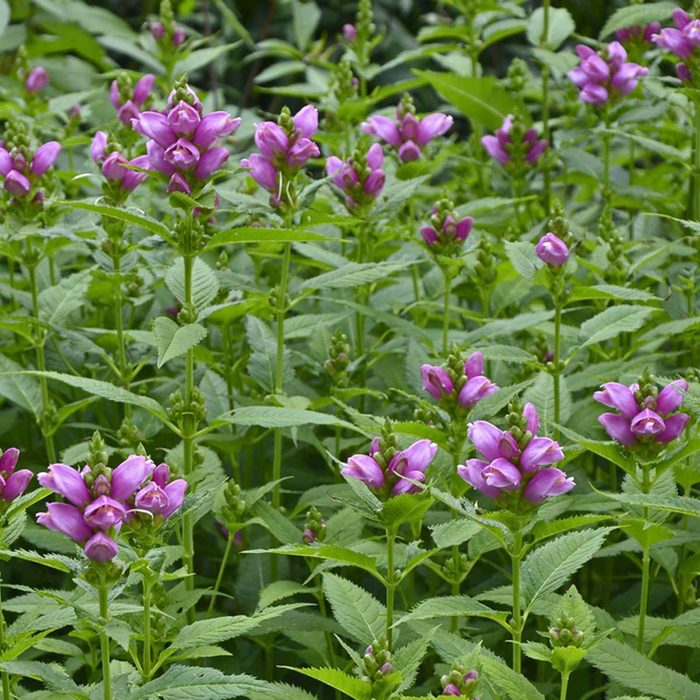
Turtlehead
Turtlehead (Chelone) has hooded flowers in hues of red, rose, pink and violet from late summer to fall—a fine time to welcome newly arriving flowers to the shade garden. It prefers moist soils and will take anything from full sun to shade. Part shade seems to suit it best. Turtlehead is hardy in Zones 3 to 8.
7
/
10

Begonia
Begonias are a treat to grow—mostly because they’re so colorful, but also because they take more shade than most annual flowers. The tuberous begonias shown here are a good example. They’re paired with creeping Jenny (Lysimachia), a perennial groundcover with nicely contrasting chartreuse foliage. Both like evenly moist soils and light shade during the summer.
8
/
10
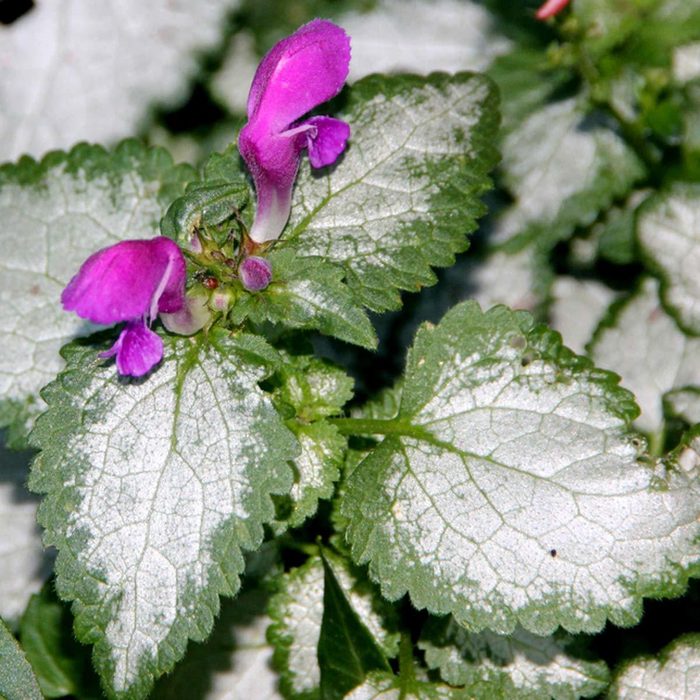
Lamium
Lamium (Lamium maculatum) is an easy-going groundcover beloved for its two-tone leaves and small, yet colorful flowers in spring. Sometimes called spotted nettle, it features tiny snapdragon-like flowers in pink, purple or white. The flowers are a bonus, though.
It’s the foliage that shines all season long with a number of different variegation patterns and colorful hues. Lamium is hardy in Zones 3 to 8, depending on cultivar.
9
/
10
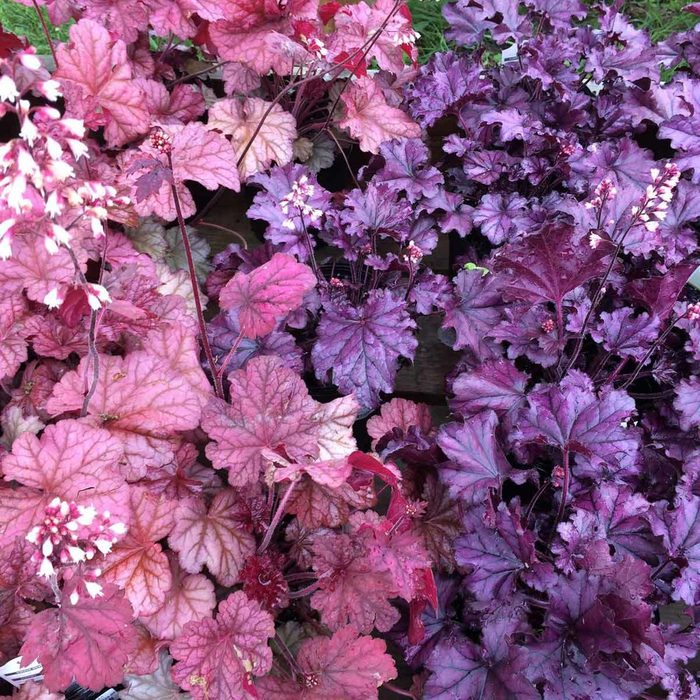
Coralbells
Coralbells (Heuchera) are becoming the foliage queens of shade garden plants, thanks to ever-more-colorful cultivars hitting the market. This mixture of ‘Berry Smoothie’ and ‘Forever Purple’ coralbells makes a dynamic combination in the low-care shade garden.
Like other coralbells, they also feature tiny bell-shaped blooms in summer. Coralbells are hardy in Zones 4 to 9, depending on the cultivar.
10
/
10
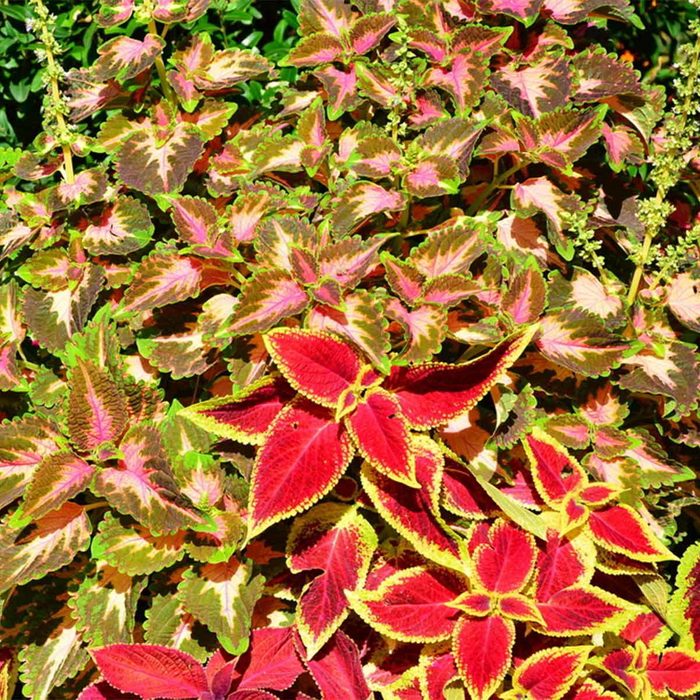
Coleus
Coleus (Solenostemon scutellariodes) isn’t just about variegation and it isn’t just about color. It’s about BOTH. The foliage has almost as many variegation patterns as it does color choices and multi-colored leaf plants.
Colors range from hues of green and yellow to red, pink, purple, bronze and orange—some solid, some variegated in beautiful patterns. These popular annuals typically grow 10 to 15 inches tall and also feature summer flowers.
FAQ
Can I grow flowering plants in heavy shade?
Yes, you can grow flowering plants in heavy shade, but don’t expect the same kind of vibrancy you can get with plants that need sun. Plant expert Melissa Rolston of Paramount Landscaping Inc. puts it this way, “You can, but be sure to manage your expectations. Typically plants covered by heavy shade often have fewer blooms; however, plants like astilbe, foxglove, and hellebores actually thrive in low light and offer subtle, beautiful color. Add in some caladium or coleus for foliage that pops even without flowers.”
Can I mix shade perennials with annuals?
Rolston says that mixing shade perennials with annuals is a “great strategy.” She adds, “Perennials give structure and return every year, while annuals let you experiment with new color combos each season. Be sure to match their sun needs. Shady companions like impatiens, begonias, and torenia play very well together.”
What colorful plants go well together?
For shady gardens, Rolston offers, “Pair lime green hostas with deep burgundy heuchera and add in white impatiens for brightness. Texture and tone together can create magic.”
About the Expert
Melissa Rolston is the Chief Strategy Officer at Paramount Landscaping Inc., an award-winning landscape company based in Canada. They offer lawn care, tree trimming, and garden installation where their experts help enhance outdoor spaces with vibrant color and lush greenery.

