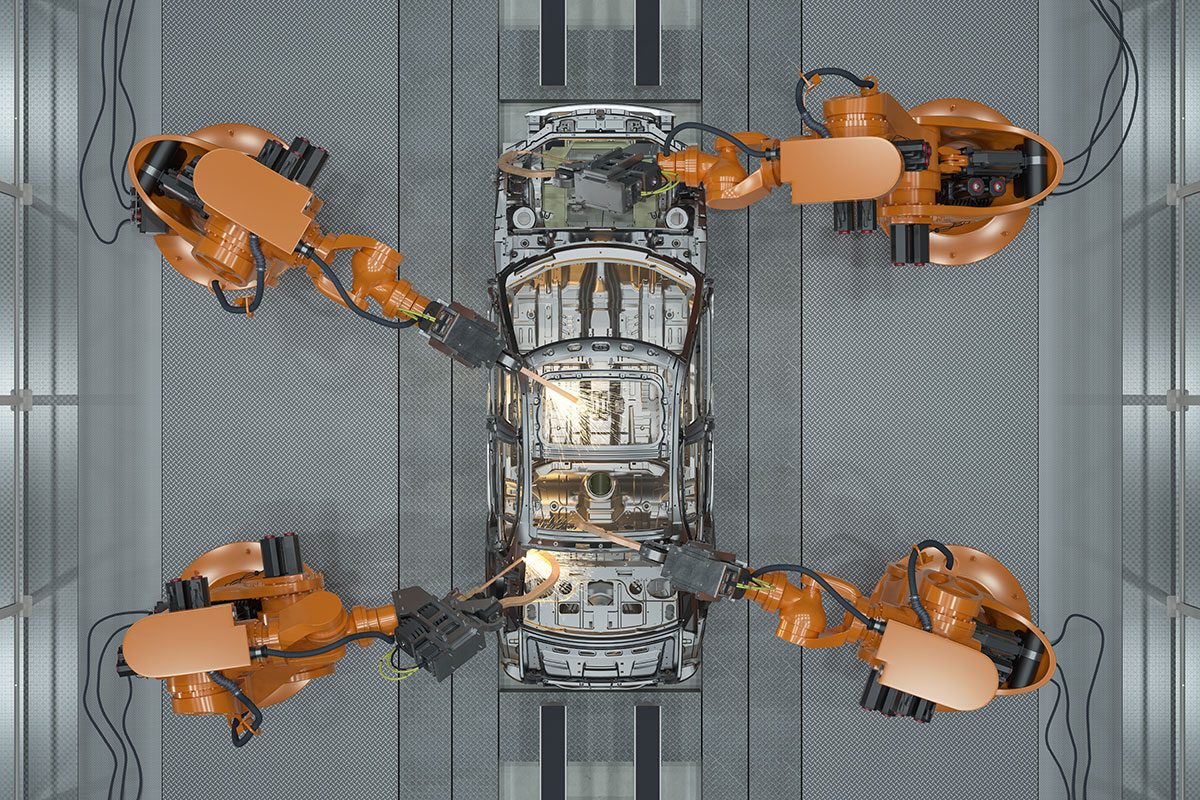
With AI advancements integrating into so many facets of our lives, it’s no surprise that in 2026, car technology is driving down that same track, helping accelerate new innovations and fine-tune others that have been in the works for years.
“We are moving past the vanity features that are offered on cars, and going straight into tech that is all about improving safety, efficiency and ownership, without requiring any attention from the driver,” says vehicle tech expert Bruce Shields.
If you’re thinking about a new car, here’s the 2026 car technology to look for, and how it will impact your driving experience.
1/8
"Quote for listicle7f5f5"
Expert Name for listicle7f5f5
Expert title for listicle7f5f5
Lupengyu/Getty Images
Advanced Autonomy
Driver assist has been around for a while, but 2026 brings ever more sophisticated systems. Look for in-cabin sensors to gauge driver impairment, custom alerts based on your driving patterns, enhanced hands-off cruise controls and other automated safety features.
“I’m really excited for this because it is going to make driving feel less robotic and more intuitive,” says Shields. “However, this is also going to lead to some programs that are cloud-dependent, which could lead to it being subscription-based.”
2/8
Dowell/Getty Images
Cloud Connectivity
In 2026, new cars will be more cloud-based than ever. “Manufacturers would like vehicles to be almost as connected as high-end smartphones, so this year, we will be seeing software-defined vehicles on the market,” says Julie Bausch Lent of Car Talk.
Some of this will also include integration with 5G connectivity, says Gary Hilson, an automotive expert at Verizon Business. Think vehicle-to-vehicle communications, vehicle-to-pedestrian alerts and vehicle-to-infrastructure warnings from intelligent traffic systems.
3/8
Birdlkportfolio/Getty Images
AI Predictive Maintenance
One technology expected to greatly escalate in 2026 is vehicles that warn you when their parts are wearing out, before anything actually fails. The more technical name for these systems is Agentic AI Co-Pilots with integrated Large Language Modules. In other words, “If a warning light goes off, you can ask the car what that means and schedule a service for that issue at the same time,” says Bausch Lent.
4/8
Bojanstory/Getty Images
Easier Diagnostics for DIYers
Even if your vehicle didn’t come with predictive maintenance and regardless of its age, new aftermarket programs are available this year, such as SPARQ. For a one-time $129 app fee (no subscription), SPARQ’s in-car personal AI mechanic can help diagnose your car, give you the vehicle history report, record strange noises under the hood, tell you if your tires need rotating and help you figure out if a repair shop’s estimate is fair.
5/8
Hispanolistic/Getty Images
Easier Diagnostics for Mechanics
Repair shops are keeping pace with 2026 car technology through enhanced diagnostics from companies like Bosch. Bosch’s new system scanners wirelessly update new-model vehicle information and remotely diagnose. They also have a new “Super Technician” AI-powered diagnostic assistant.
“While intended for professional use, these innovations benefit consumers by helping technicians make faster and more precise repairs,” says Duane “Doc” Watson, a technical trainer at Bosch Mobility Aftermarket.
6/8
Witthaya Prasongsin/Getty Images
Upgraded EV Batteries
Solid-state batteries are considered the “Holy Grail” of EV battery tech — and in 2026, the first ones will finally hit the consumer market. This year, they’re only available in a handful of vehicles in Europe. However, they’ll roll out on a wider scale in the U.S. starting in 2027 and 2028.
“This new innovation means a much longer range and super-fast charging, which addresses two of the biggest complaints from consumers,” says Bausch Lent. Solid-state batteries also provide greater safety, since their cells don’t contain liquid electrolytes.
7/8
PATRICK T. FALLON/Getty Images
Smarter Home EV Charging
Home chargers for EVs and hybrids are also becoming more sophisticated in 2026, with smart features such as off-peak charging and prioritized multi-vehicle charging. For example, CleverCharge just launched a new AI-powered smart charger, designed for households with multiple EVs.
“This will help drivers more easily fit charging into their everyday lives through better planning and management, and take the guesswork out of whether you have enough range to make it through the day,” says Scott Bolt of CleverCharge.
8/8
Olivier Le Moal/Getty Images
Enhanced Driver Training
As cars become more complex, driver’s education is working to keep pace. For example, the driver’s ed app Zutobi uses 3D simulation to help students make decisions in hazardous situations. It also uses AI-driven adaptive learning to personalize driver education in real time. “Students spend more time on what they struggle with, and less on what they already understand,” says Zutobi co-founder Lucas Waldenbäck. “One-size-fits-all instruction no longer works when driving environments and vehicle systems vary so widely.”
FAQ
How will AI impact auto tech in 2026?
AI advancements are now the key focus for auto manufacturers, says Lent. Furthermore, according to Watson, “In 2026, AI will transition from being primarily a consumer-facing feature to serving as an essential operating layer that supports both the driving experience and vehicle maintenance.” What that means to consumers is that AI will help improve driver safety through Advanced Driver Assistance Systems (ADAS) and AI-powered voice assistants, he says.
What are the potential challenges of these advances?
The most obvious challenges of 2026 auto tech revolve around cost. Many innovations are only available in high-end vehicles, and some of those systems require a monthly subscription to unlock their full suite of capabilities.
But the advances present other challenges, too, says Bausch Lent, including privacy and liability issues. “While I think most of these advancements are a good thing, I also often miss the simple experience of driving a manual transmission vehicle down a country road,” she says.
About the Experts
Duane “Doc” Watson is a technical trainer at Bosch Mobility Aftermarket. He has more than 45 years of experience in automotive repair, has trained thousands of technicians and earned many industry awards, including Chevrolet Technician of the Year and Buick Service Master of the Year.
Julie Bausch Lent is managing editor of Car Talk, the digital content iteration of the long-running NPR show about all things automotive.
Bruce Shields is president and founder of ABS Tag & Title and ATC Driveaway. He has more than 40 years of experience with automobile technology and innovation.
Scott Bolt is chief strategy officer at Danlaw, the makers of CleverCharge EV charging systems.
We are no longer supporting IE (Internet Explorer) as we strive to provide site experiences for browsers that support new web standards and security practices.